
Trades
Build skills for in-demand trades through hands-on, safety-focused training. Prepare for careers in construction, manufacturing, and technical fields.
Categories

Building Construction
Learn skills for construction projects from planning to completion. Build knowledge in materials, methods, and safety for residential and commercial work.
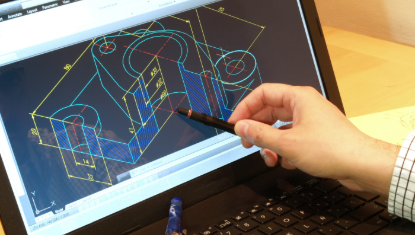
Drafting
Develop drafting skills to create technical drawings and plans. Learn precision techniques used in design, construction, and engineering fields.

Electrical
Train in electrical systems, wiring, and safety practices. Build skills for installation, maintenance, and troubleshooting in residential and industrial settings.

Law Enforcement
Prepare for public safety roles with training in procedures, communication, and field readiness. Build skills for effective and responsible law enforcement work.

Machining
Learn machining techniques to produce precision parts and components. Build skills in equipment operation, measurement, and manufacturing processes.

OSHA / Safety Training
Build knowledge to identify hazards and promote safe work environments. Learn best practices to reduce risk and support workplace safety across industries.

Welding
Develop welding skills through hands-on training. Learn techniques, safety practices, and processes to create strong, reliable welds for various applications.
Course Catalog
Introduction to Mechanical Drafting with Autodesk Inventor
This 25-hour beginner-level night class introduces students to 3D mechanical drafting and design using Autodesk Inventor. Building on prior AutoCAD experience, participants will learn to create parametric parts, assemblies, and professional 2D drawings that align with industry standards. Core topics include sketching, part modeling, assembly constraints, exploded views, and documentation with dimensions and annotations. Students will also explore templates, title blocks, and presentation tools. A final project integrates all skills into a portfolio-ready design package. Prerequisite: Mechanical Drafting with AutoCAD or equivalent AutoCAD skill set.

Erosion Control / Storm Water
Contractors, learn the new guidelines! Topics covered are federal and local erosion and sediment controls requirements; responsible person requirements; local training and certification; best management practices; erosion control; sediment control; the top 10 compliance problems. After passing this class, you apply for ESC certification from the City of Pocatello. Additional fees apply.

OSHA Bloodborne Pathogens
Employers! Are you tired of employee resistance to the usual, boring, inconvenient OSHA Bloodborne Pathogen presentations? Then this course is for you and your employees! This user-friendly, online-based course allows students to complete the course at their own convenience. The OSHA Bloodborne Pathogen Standard is the focus, with current information on the three most devastating and common bloodborne pathogens. Online handouts and competency quizzes assure the student’s competency. This OSHA reviewed course is designed to meet the minimum requirements of CFR 29 1910.1930 annual education for employees. Don’t be a victim to deadly bloodborne diseases. Learn how to protect yourself by adhering to the simple rules covered in this presentation. This online series was made possible by the Susan Harwood Training Grant Program. “This material was produced under grant SH20849SH0 from the Occupational Safety and Health Administration, U.S. Department of Labor. It does not necessarily reflect the views or policies of the U.S. Department of Labor, nor does mention of trade names, commercial products, or organizations imply endorsement by the U.S. Government.” *This class is fully online, registered participants will receive 90 days to watch, review, and complete. A certificate will be available upon completion and successful submission of course work.
2023 NEC Code Update
Every 3 years the National Electrical Code is revised and new code changes are included and adopted by the states. To renew their licenses in Idaho, Master and Journeyman electricians must have 24 hours of continuing education, 8 hours of which must be on the current code changes to renew their licenses. This course is approved in Idaho, Utah, Montana and Wyoming. Idaho #20-1009086 • Utah #24553 • Montana • Wyoming #WY-23-460C Books:NEC Code Book, 2023Mike Holt Code Changes Book

Beginning/Intermediate/Advanced Welding
Re-tool your skills to take advantage of in-demand, high paying jobs in the manufacturing sectors. If you're an individual who likes building things, working with your mind and hands or simply enjoys seeing the results of your efforts, then we have just what you're looking for. These self-paced courses are designed for the beginner, intermediate, or experienced welder. SMAW and GMAW are taught at all levels. GTAW (TIG) will be covered only in the intermediate/advanced welding class. The following topics will be covered: Machine Settings, Preparation of Materials, Safety and Welding in all positions. Students MUST attend the FIRST night to continue with the class. No welding equipment is required for the first night of class. The students will receive an equipment list and will be advised of the best place to purchase the supplies. First night is two hours only. There are three types of welding offered. Arc and Mig have similar equipment. However, they are taught separately. Each section is thirty hours. In this course there is no hobby welding or building of projects. Students must be 18 years of age to attend the class. NOTE: Cost of the tools and protective equipment for the class is estimated to be $150 to $200. Facts About Welding: Experts predict a large shortage of capable manufacturing workers in the next few years almost everywhere, and many companies now report difficulty finding welders. The Bureau of Labor Statistics projects that the growth in this sector will be 15% over the next decade.

Certified Food Safety Manager
This Certified Food Safety Manager Course (CFSM) covers food safety issues, regulations, and the techniques necessary to maintain a food safe environment. Handling food correctly is not only the law, but it improves public safety and lowers costs. Learn to implement essential food safety practices and create a culture of food safety. Food safety is critical to sales and the continued patronage of your establishment. Establishments found to violate food safety protocols are fined or closed—food safety is that important. The role of a food manager is crucial. Now is the time to certify your department managers and food handlers as a Certified Food Safety Manager. Course conducted in English. The 2013 Food Code requires upon request the person in charge (PIC) shall demonstrate to the regulatory authority knowledge of foodborne disease prevention, application of the Hazard Analysis and Critical Control Points (HACCP) principles, and the requirements of the Food Code.The PIC shall demonstrate this knowledge by: Having no violations of priority items during the current inspection Being a certified food protection manager (CFSM) or Responding correctly to the inspector's questions to specific Food operation. The areas include: The prevention of foodborne disease Preventing the transmission of foodborne disease The symptoms associated with the diseases that are transmissible through Food The significance of Time/Temperature Control for Safety Food and preventing illness Identifying major food allergens and the symptoms Providing protection from backflow and precluding the creation of cross connections Poisonous or toxic materials in the food establishment Identifying Critical Control Points in the operation from purchasing through sale or service How the PIC and employees comply with the HACCP Plan Responsibilities, rights, and authorities of the employee, PIC, regulatory authority and The reporting responsibilities and exclusion or restriction of food employees This is a nationally recognized course and will meet the Person in Charge and CFSM requirements for all States. Be a food safety leader and invite other food handlers from establishments in your community to follow your lead and become a CFSM. Who Needs this Class Restaurants Grocery Stores that prepare food Hotels Hospital Cafeteria/Café Schools Baristas The 2017 Food Code REQUIRES the Person in Charge to be a CFSM. About the Course $130.00 per person

Electrical Grounding and Bounding (NEC 2023)
This 8 hour class highlights one of the most important, but least understood articles in the National Electrical Code® - Grounding and Bonding. Simply put, proper grounding and bonding protects your employees from electric shock and your plant and equipment from heat and fire. We will aim at reducing these risks and help answer any power quality issues you may be experiencing. This course is approved in Idaho, Utah, Montana and Wyoming. Idaho #20-1010960 • Utah #24551 • Montana • Wyoming #WY-23-459C Book: Mike Holt Bonding and Grounding textbook

Idaho Police Officer Standards Certified Training (POST)
This 15-week program follows the curriculum of Idaho POST, in Meridian. All of our instructors are police officers or retired police officers. The curriculum will cover everything from Drill and Ceremony, Domestic Violence, DUI/SFST, Crime prevention, Health and Fitness to EVOC, Defensive Tactics, Firearms, etc. The program is a mixture of book-work and hands-on training. At the end of the 15-weeks, the officer will take a certification exam in Patrol and Reserve. This is currently a restricted course, an access code is required for registration. Please contact the Law Enforcement Program at ISU for details to register. Call Kendra at (208) 282-3083.

Introduction to AutoCAD Windows 2020
Want to learn the fundamentals of creating high precision technical graphics? Computer aided design (CAD) is used in many fields. It can increase the production and clarity of the design concept. Computer-aided design is one of the many tools used by engineers and designers. Take advantage of learning some of the concepts utilized by those in-demand, high paying jobs that utilize this valuable tool. You will learn the alphabet of lines, basic AutoCAD commands used graphically in documenting your ideas, and then how to plot them to paper. While there are no prerequisites for this fundamental CAD course, you should be proficient in basic computer skills.