
HVAC
Start a career in heating and cooling with hands-on HVAC training. Develop skills in system diagnostics, climate control, and efficient installation practices.

Course Catalog
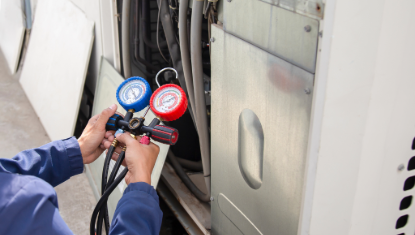
HVAC Apprenticeship - Year 1
Start building your future in the heating, ventilation, air conditioning, and refrigeration trade with HVAC Apprenticeship - Year 1. This course provides first-year HVAC apprentices with the required classroom training that supports their on-the-job learning and career development. Students will be introduced to HVAC principles, trade mathematics, heating systems, cooling systems, refrigeration concepts, air distribution systems, copper and plastic piping practices, soldering and brazing, duct systems, basic electricity, electrical measuring instruments, HVACR electrical components, fuel gas code requirements, mechanical code topics, and industry safety practices. The course is designed to help apprentices develop the foundational knowledge, confidence, and code awareness needed as they begin working toward a career in the HVAC trade. This is a non-credit apprenticeship training course and represents one year of the HVAC Apprenticeship program. Completion of this course fulfills the annual State of Idaho classroom training requirement of 144 hours for first-year HVAC apprentices. To better support working apprentices, the course allows students to attend class in person or participate remotely through Zoom. Classes are held on Tuesday and Thursday evenings, helping apprentices stay connected to their classroom training while balancing work schedules, travel, and other responsibilities.
HVAC Apprenticeship - Year 2
Continue building your future in the heating, ventilation, air conditioning, and refrigeration trade with HVAC Apprenticeship - Year 2. This course provides second-year HVAC apprentices with the required classroom training that supports their continued on-the-job learning and career development. Students will expand on first-year fundamentals through instruction in compressors, fasteners and hardware, refrigerants and oils, metering devices, leak detection, evacuation, recovery and charging, basic maintenance, customer relations, alternating current, heat pumps, chimneys, vents and flues, indoor air quality, air quality equipment, fuel gas code requirements, and mechanical code topics. The course is designed to help apprentices strengthen their system knowledge, code awareness, troubleshooting ability, and professional skills as they continue working toward a career in the HVAC trade. This is a non-credit apprenticeship training course and represents one year of the HVAC Apprenticeship program. Completion of this course fulfills the annual State of Idaho classroom training requirement of 144 hours for second-year HVAC apprentices. To better support working apprentices, the course allows students to attend class in person or participate remotely through Zoom. Classes are held on Tuesday and Thursday evenings, helping apprentices stay connected to their classroom training while balancing work schedules, travel, and other responsibilities.
HVAC Apprenticeship - Year 3
Continue advancing your skills in the heating, ventilation, air conditioning, and refrigeration trade with HVAC Apprenticeship - Year 3. This course provides third-year HVAC apprentices with the required classroom training that supports their continued on-the-job learning and career development. Students will build on prior HVAC coursework through instruction in control circuit troubleshooting, motor testing and troubleshooting, cooling system troubleshooting, gas heating troubleshooting, heat pump troubleshooting, oil heating troubleshooting, HVAC accessories, hydronic systems, steam systems, retail refrigeration systems, fiberglass and fabric duct systems, sheet metal duct systems, zoning systems, ductless systems, variable refrigerant flow systems, practical mathematics for heating and cooling, and related code topics. The course also includes continued study of the International Fuel Gas Code and International Mechanical Code, helping apprentices strengthen their troubleshooting ability, system knowledge, and code awareness. This is a non-credit apprenticeship training course and represents one year of the HVAC Apprenticeship program. Completion of this course fulfills the annual State of Idaho classroom training requirement of 144 hours for third-year HVAC apprentices. To better support working apprentices, the course allows students to attend class in person or participate remotely through Zoom. Classes are held on Tuesday and Wednesday evenings, helping apprentices stay connected to their classroom training while balancing work schedules, travel, and other responsibilities.

HVAC Apprenticeship - Year 4
Complete the final year of classroom training in the heating, ventilation, air conditioning, and refrigeration trade with HVAC Apprenticeship - Year 4. This course provides fourth-year HVAC apprentices with the required classroom training that supports their continued on-the-job learning and preparation for completion of the apprenticeship program. Students will study advanced HVAC topics including energy conservation equipment, building management systems, system air balancing and psychrometrics, system startup and shutdown, construction drawings and specifications, comfort system design and planning, commercial and industrial refrigeration, alternative and specialized heating and cooling systems, commercial hydronic systems, commercial airside systems, and leadership. The course also includes continued instruction in the International Fuel Gas Code, International Mechanical Code, and related residential code topics, helping apprentices strengthen their code knowledge, system-design understanding, troubleshooting ability, and readiness for advanced responsibilities in the HVAC trade. This is a non-credit apprenticeship training course and represents one year of the HVAC Apprenticeship program. Completion of this course fulfills the annual State of Idaho classroom training requirement of 144 hours for fourth-year HVAC apprentices. To better support working apprentices, the course allows students to attend class in person or participate remotely through Zoom. Classes are held on Tuesday and Wednesday evenings, helping apprentices stay connected to their classroom training while balancing work schedules, travel, and other responsibilities.